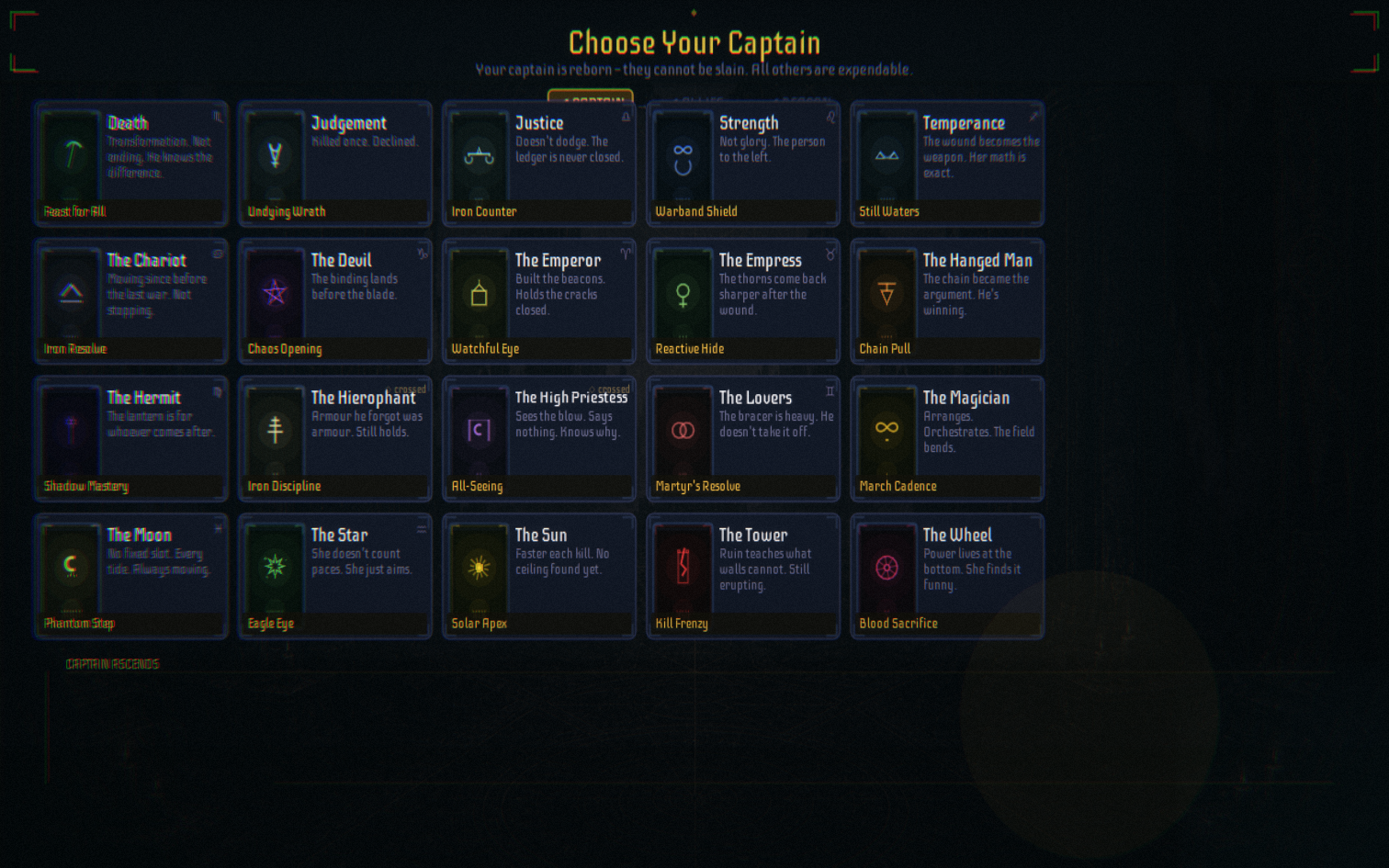
Name the captain
Choose a Major Arcana leader and the question Marget lays beneath them.
adarkfable presents
Ask a question. Lay the arcana. Cross the field. Let Marget tell you what it meant.
A ritual tactics roguelike where tarot is not a skin. It is the roster, the field, the route, the archive, and the memory the war leaves behind.
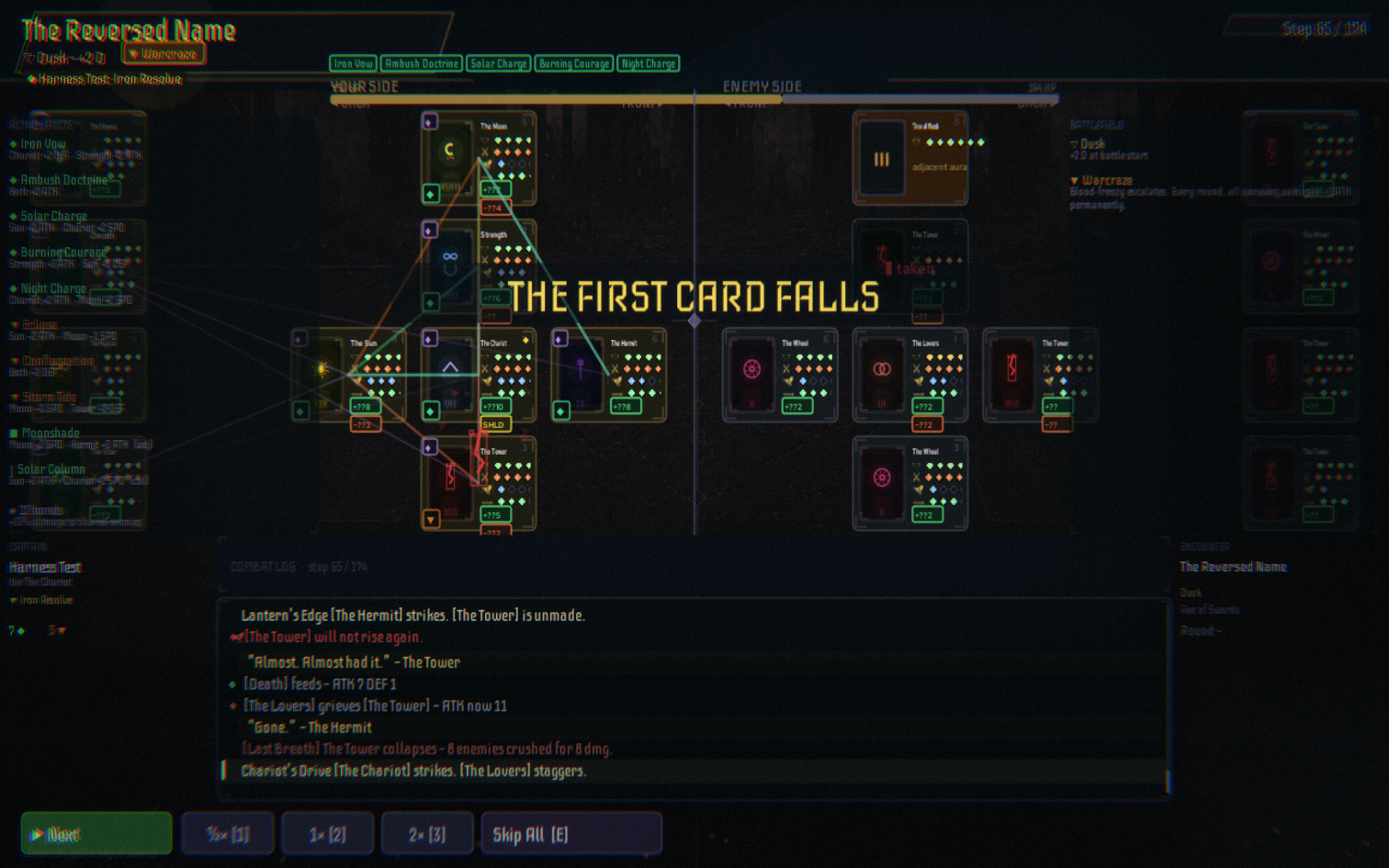
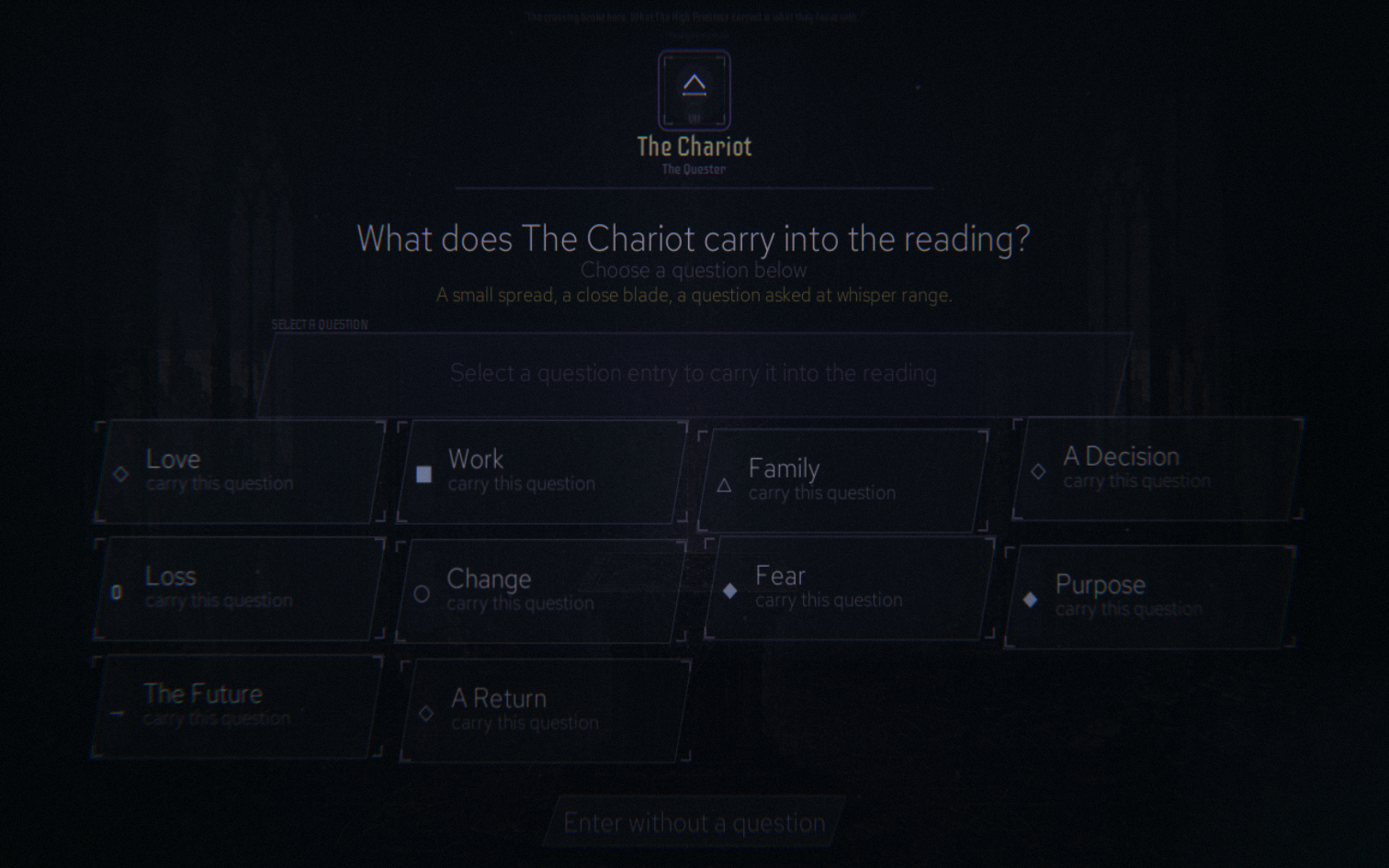
The Game
Choose a captain, swear a frame over the run, arrange the formation, then watch the field replay the cost of every placement. The ending does not step outside the game: Marget reads the run back to you in the same candlelit grammar you fought through.
Choose a Major Arcana leader and the question Marget lays beneath them.
Pick the mode and oath that decide what kind of crossing this run will become.
Place units, beacons, stances, and bonds before the field answers in steel.
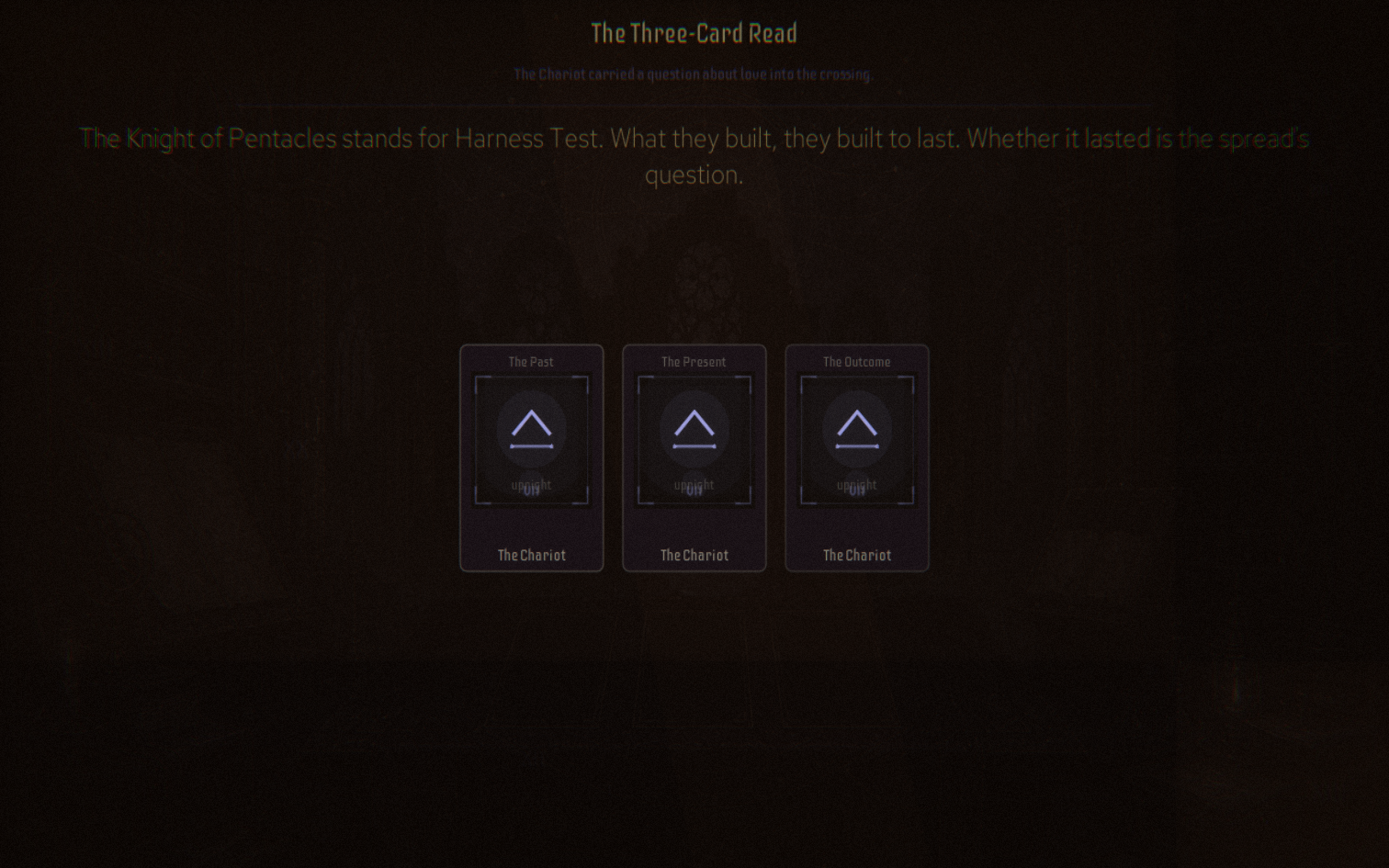
Win or lose, the game interprets the run as an artifact you can revisit.
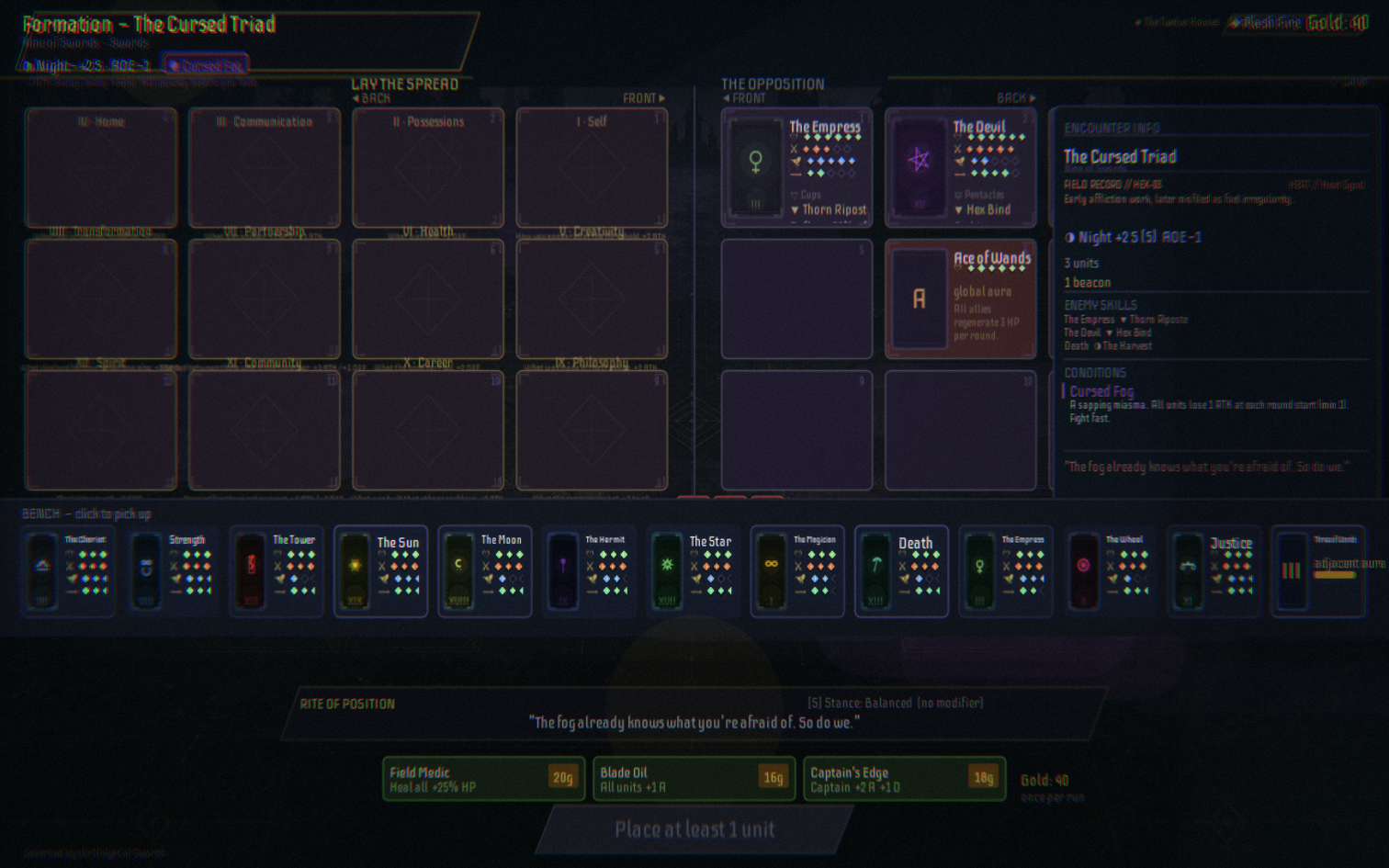
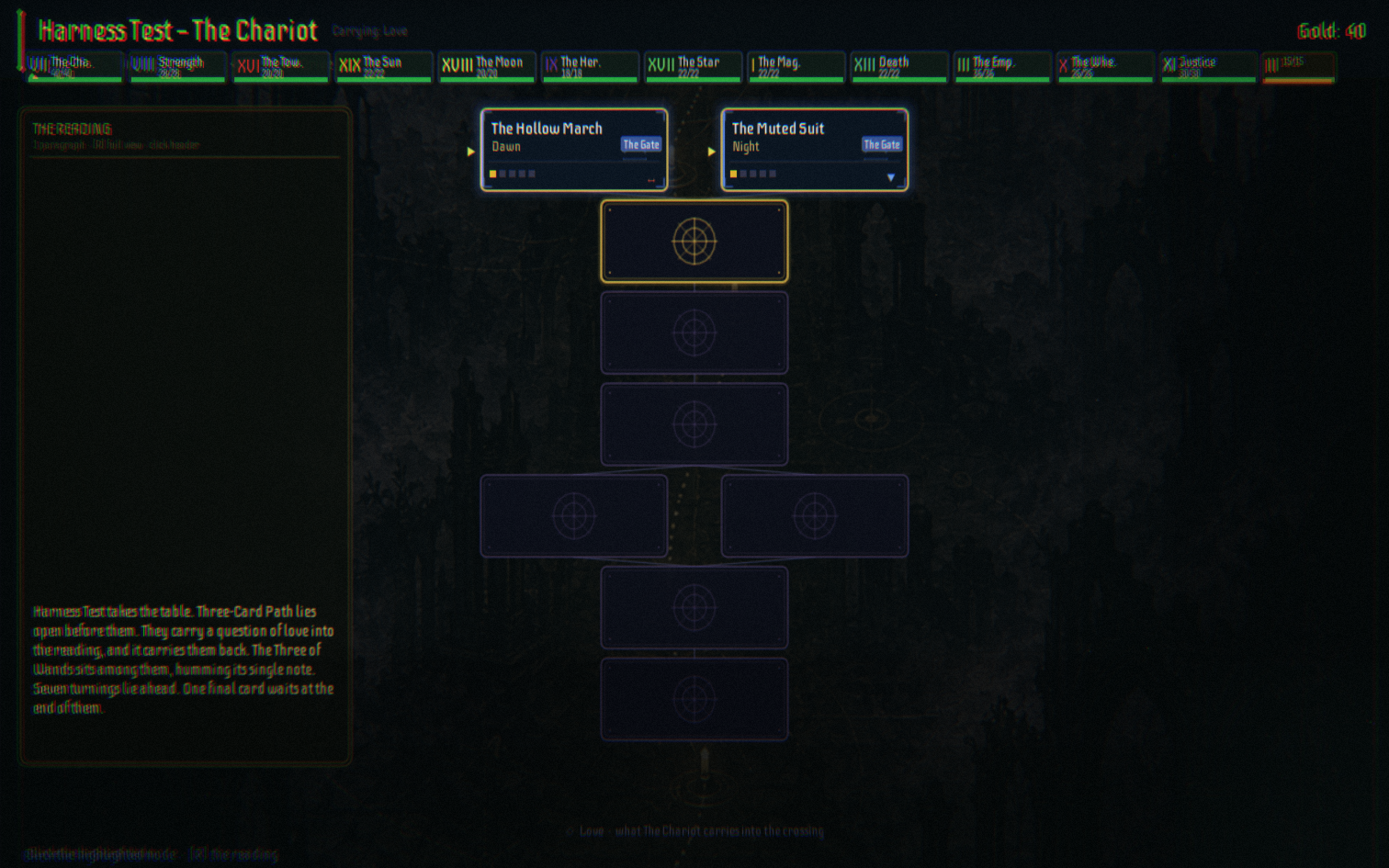
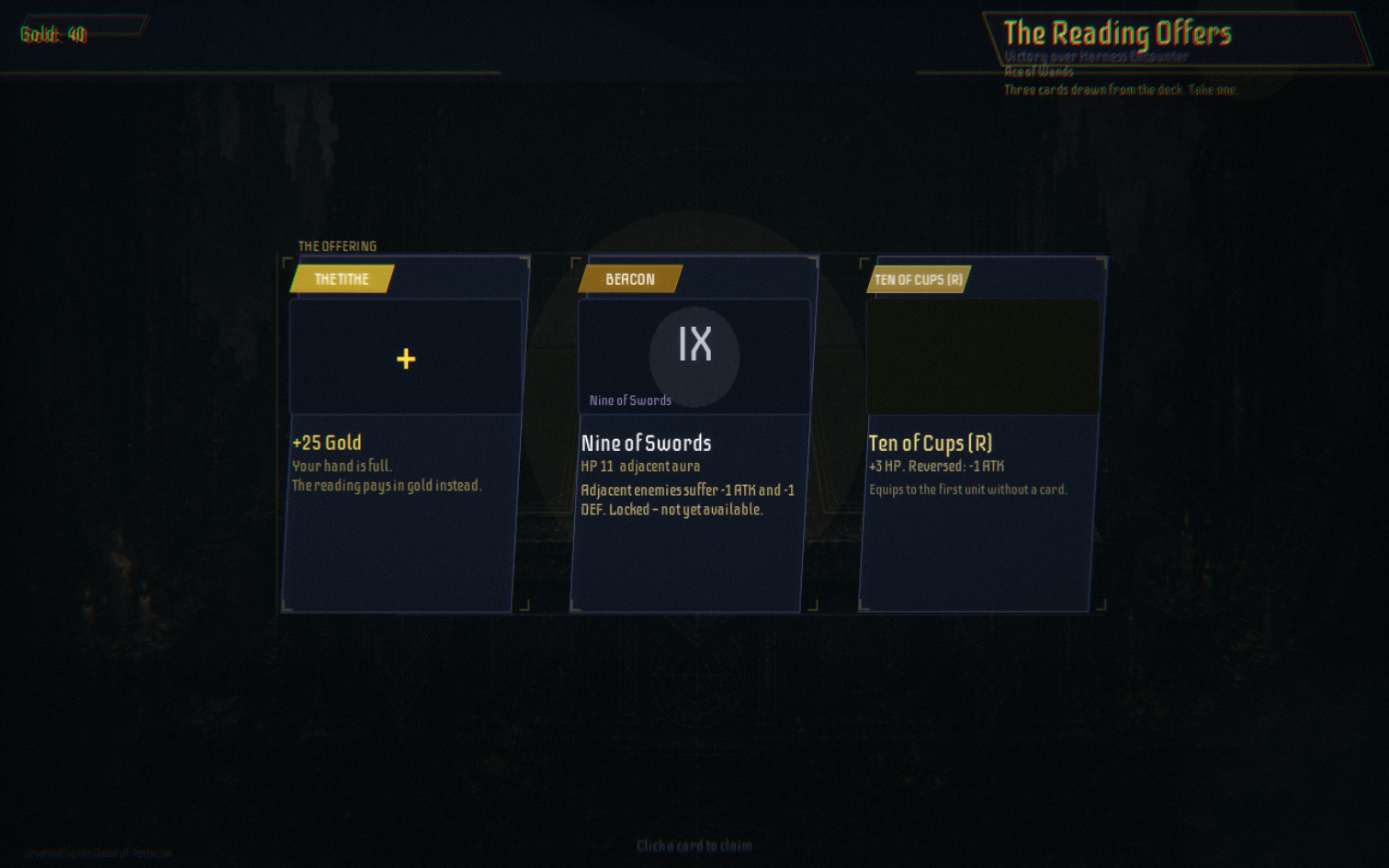
The Crossing
Cards glint like small machines of fate. Cathedrals open into battlefield maps. Records, oaths, and wounds gather in the margins until the table feels older than the run that brought you there.
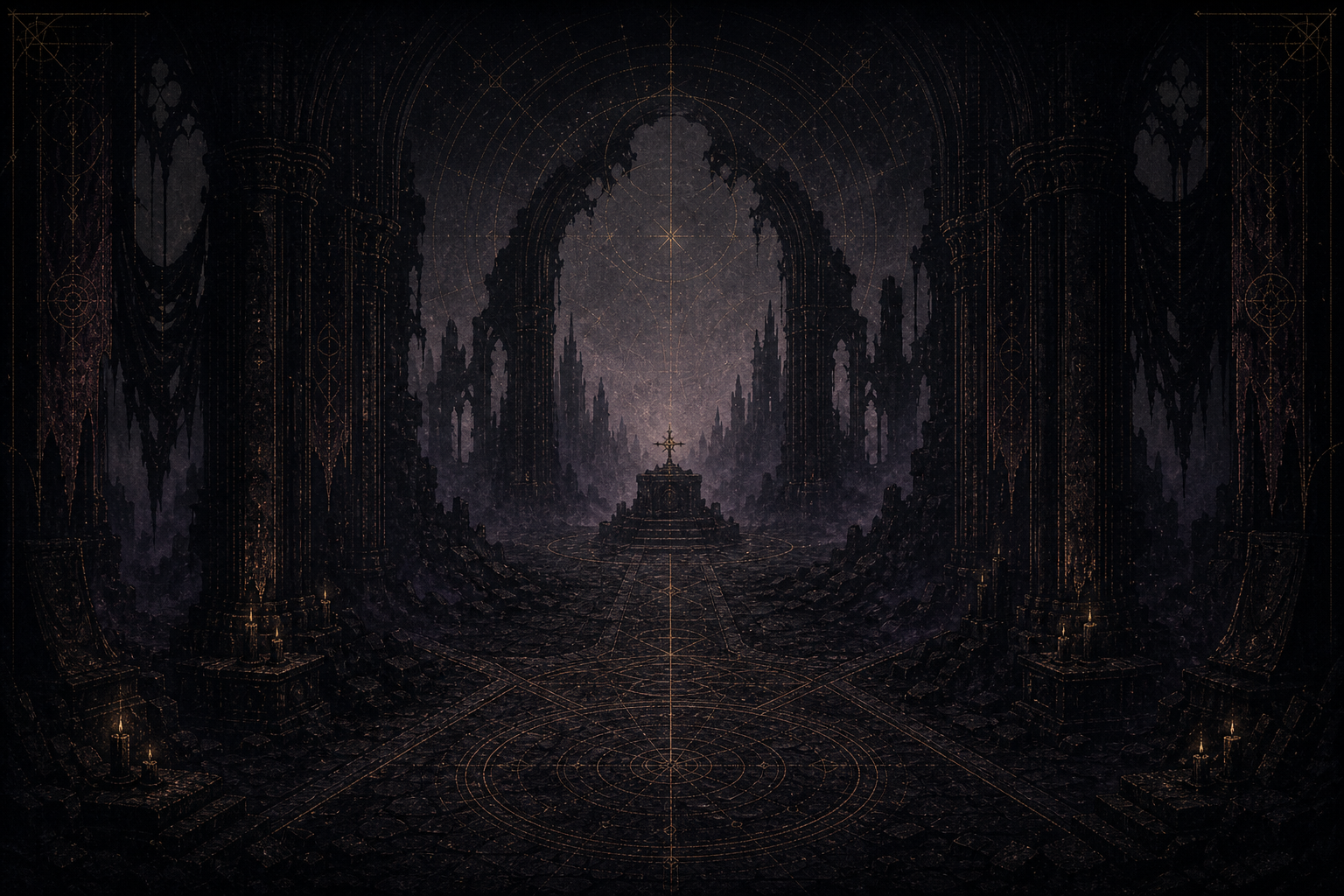
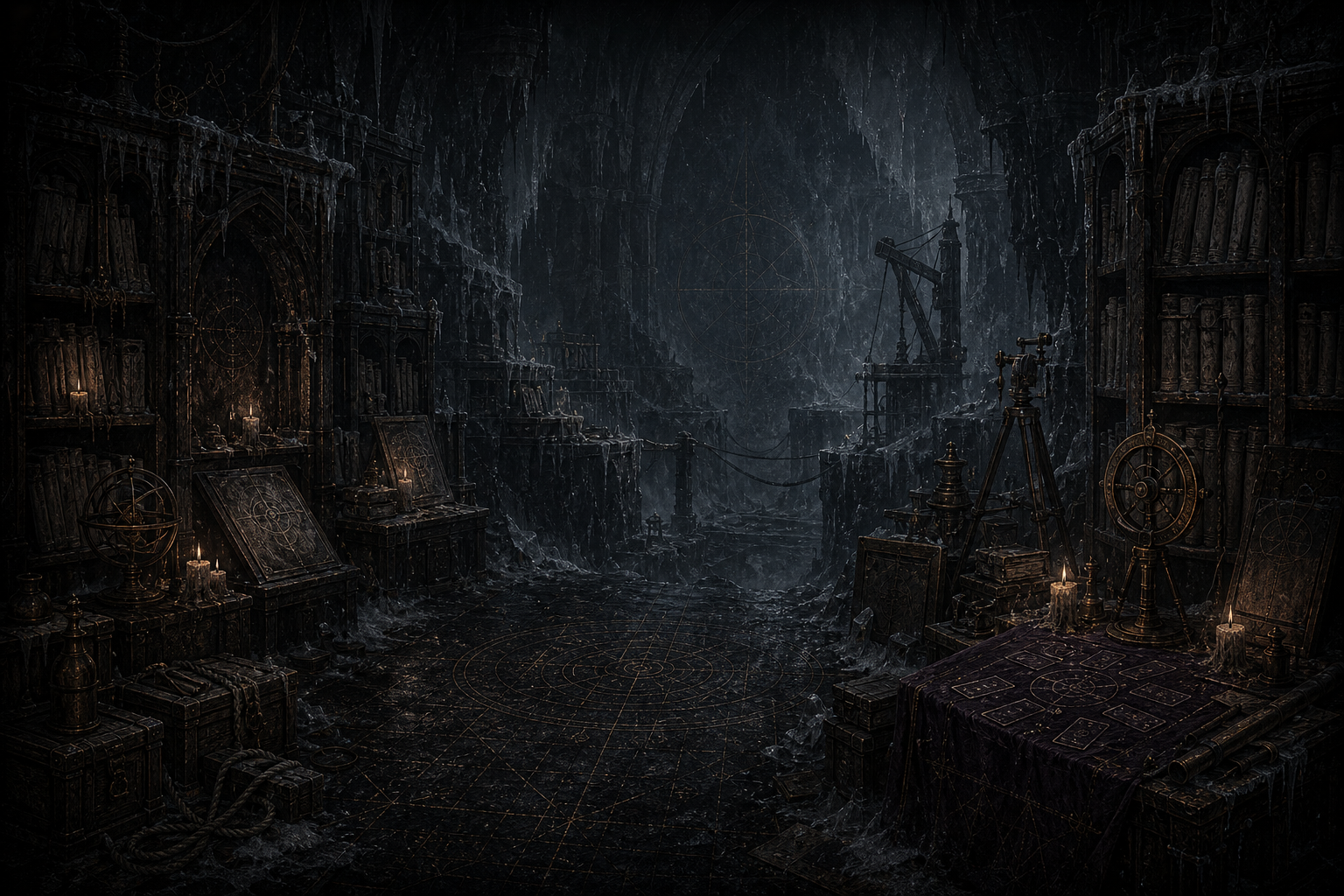
Marget's Table
The Crossing is not only a march. Marget's Table is the quieter room around it: card games, archive shelves, reading artifacts, ambient mixes, and instruments built for reflective play rather than mastery.
Crossing, War, Tower, Patience, Pyre, divination, and more small rituals around the main run.
Books, codex pages, field records, run history, and fragments that make the world feel older than the player.
Room mixes and instruments let the game hold a softer mood without breaking its occult military frame.
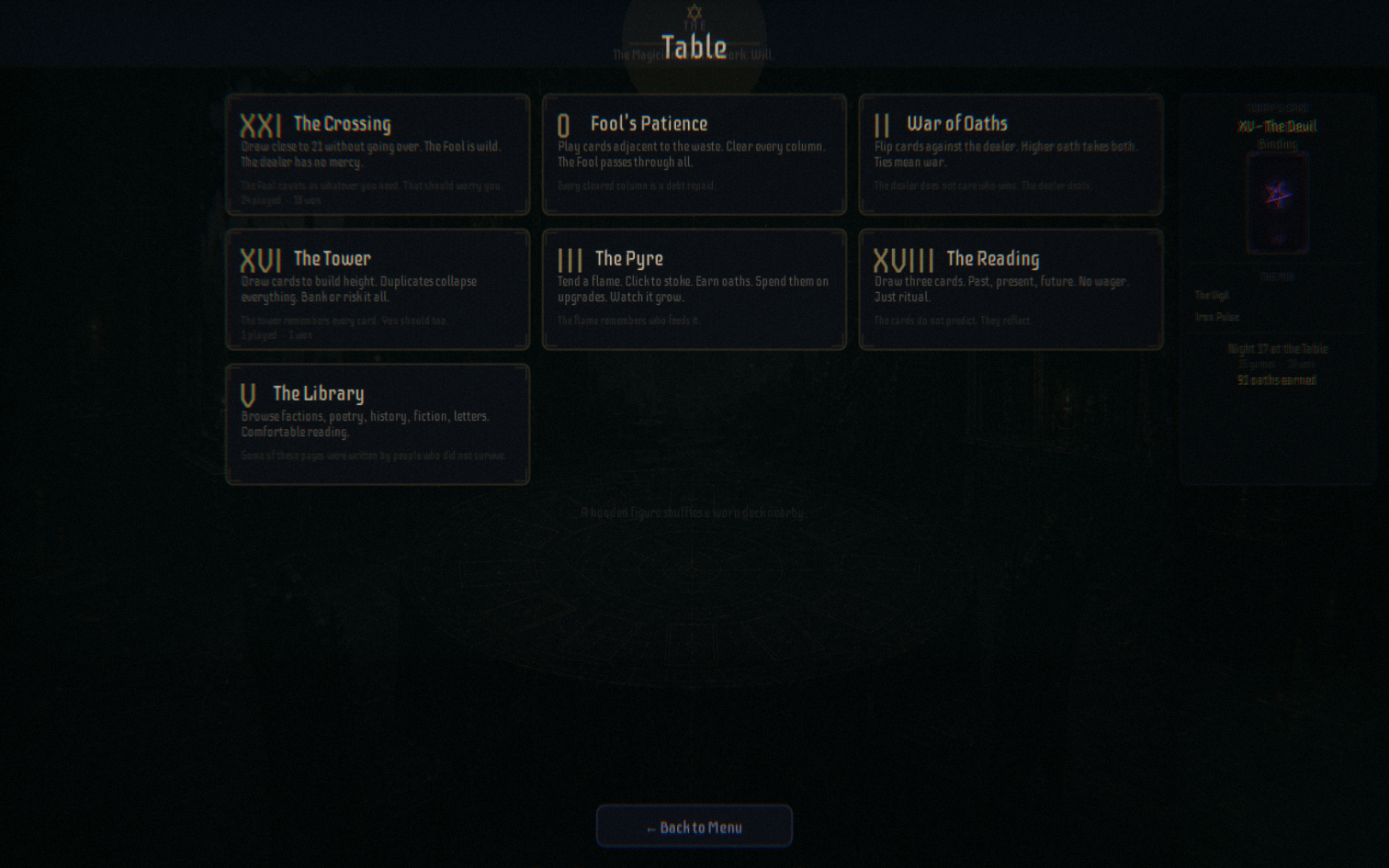
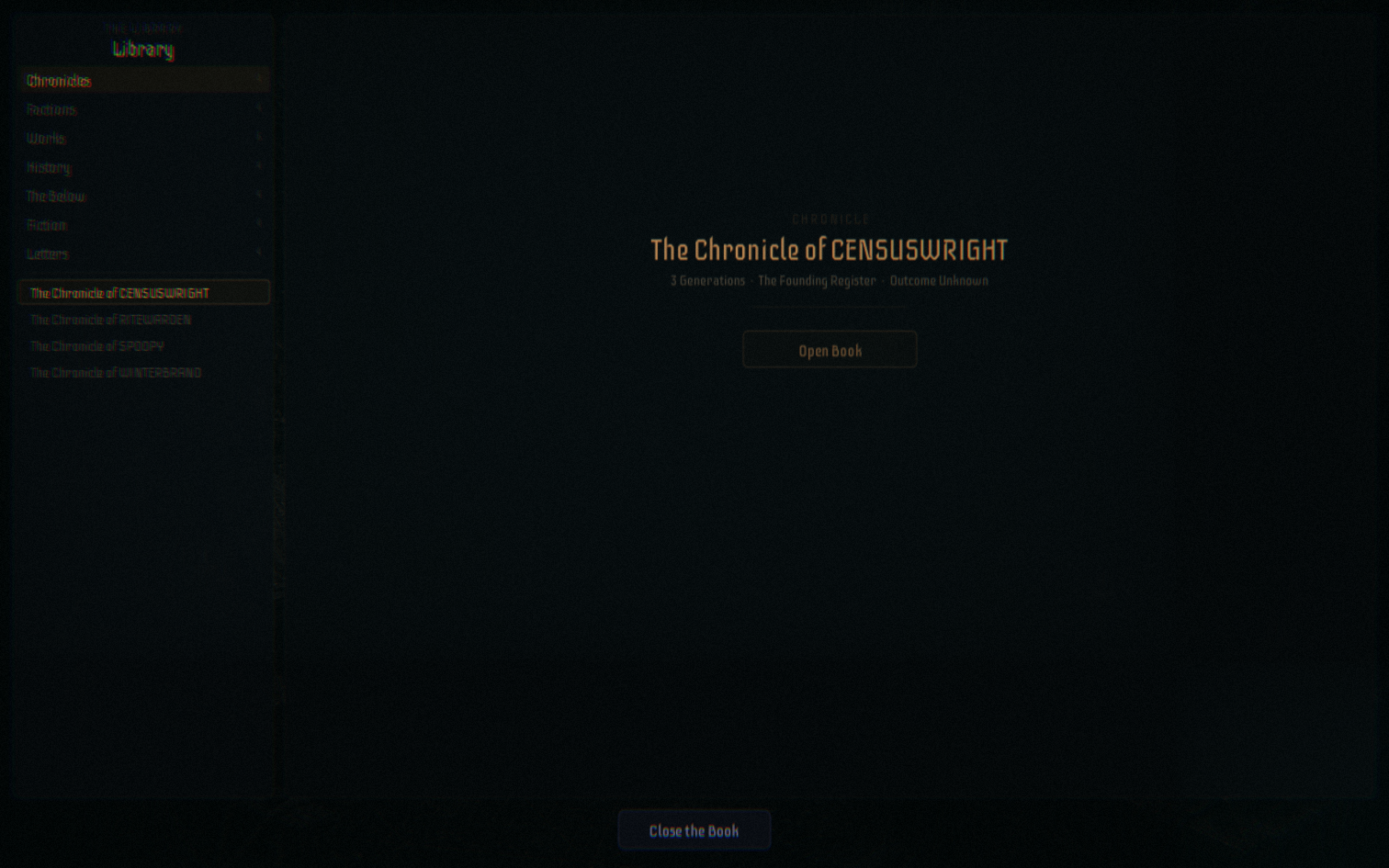
Artifacts
The ending is staged inside the game. The cards, captain, question, route, and loss history become a reading with its own visual weight, then live in the archive or leave as a keepsake.
The ritual stays intact from the first question to the final interpretation.